 Explore BubbleTubing.com
  Aeration
  Deicing
  Floating Fountains
  Bioaugmentation
  Aquatic Tools
  Bubble Curtains
 Invasive and Exotic Aquatic Plants
🔎 Looking for information about Eurasian watermilfoil?
For Eurasian watermilfoil specifically, our current recommendation is ProcellaCOR FX — a selective, low-dose treatment registered for aquatic use in Canada (2023) that targets milfoil directly, roots included.
→ Eurasian Water Milfoil Control with ProcellaCOR FX
→ Milfoil FAQ & resources
Aquatic plants can help purify the water column, but invasive aquatic plants can clog shorelines, spoil swimming areas, tangle propellers and trip water-skiers.
What are exotic invasive plant species?
“Exotic” refers to plants introduced from another country or region. Without natural enemies here, some can spread and displace native species. These opportunistic plants are called invasive.
What to do about invasive aquatic weeds in your pond?
- Identify the invasive aquatic weeds you have in your pond to make sure you are not trying to remove native (indigenous) aquatic plants that are beneficial to your ecosystem. There are many online resources to help you with this. If you are in public waters (a lake or river), be particularly careful, as you could be fined heavily for removal of native aquatic habitat. Monitor your pond for newly established non-native aquatic weeds; removing them while they are small is often the easiest option. Not sure whether you are seeing algae or an aquatic plant? Start with Algae or Aquatic Plants: How to Tell Them Apart?
- Remove young shoots by hand, or use the Razor and Weed Rake to remove plant material. Do not put removed plant material in a compost bin or compost site; send it to landfill. Apply a benthic barrier for 4-5 weeks to kill the plants and roots directly beneath it; it is best suited to small, defined areas and can then be moved.
- If removal is not practical, try to remove seed heads as they appear. Cut brown cattail seed heads before they open, and cut common reed seed heads before they mature. Compost the material away from the pond. Aquatic non-native invasive species can reproduce by seed, by tuber, and by rooting leaf debris; they are very adept at taking over aquatic real estate.
- After removing invasive species, plant native aquatic plants in the open space to help restore native habitat. Plant densely where appropriate, and continue removing unwanted plants as they appear. You can find a list of indigenous plants recommended for watersheds HERE. For the best value, ask a local nursery that grows native aquatic plants about purchasing small plugs in quantity.
- If all of this seems overwhelming, try the long-term approach. Lay down bubble tubing among the weeds to provide aeration from the bottom up. Use beneficial bacteria to help consume the nutrient-rich sediment that feeds the aquatic plants. When plants begin to decline, remove plant material with the Weed Rake and Razor, then compost it away from the water. Removing plant material removes nutrients stored in that material from the pond. Also, less muck equals less substrate for the plants to grow in.
- If there are already too many weeds or too much shoreline to manage, focus first on one area that provides access to a small beach, dock or the rest of the lake.
Some invasive aquatic plants to watch for
Here are 9 invasive aquatic plants (pictured in the images below) to watch for:
- Flowering Rush, Butomus Umbellatus
- Purple Loosestrife, Lythrum Salicaria
- European Frogbit, Hydrocharis Morsus-Ranae
- Reed Canary Grass, Phalaris Arundinacea
- Common Reed, Phragmites Australis
- Eurasian Water Milfoil, Myriophyllum Spicatum
- Water chestnut, Trapa Natans
- Knotweed, Fallopia Japonica
Invasive species field guide
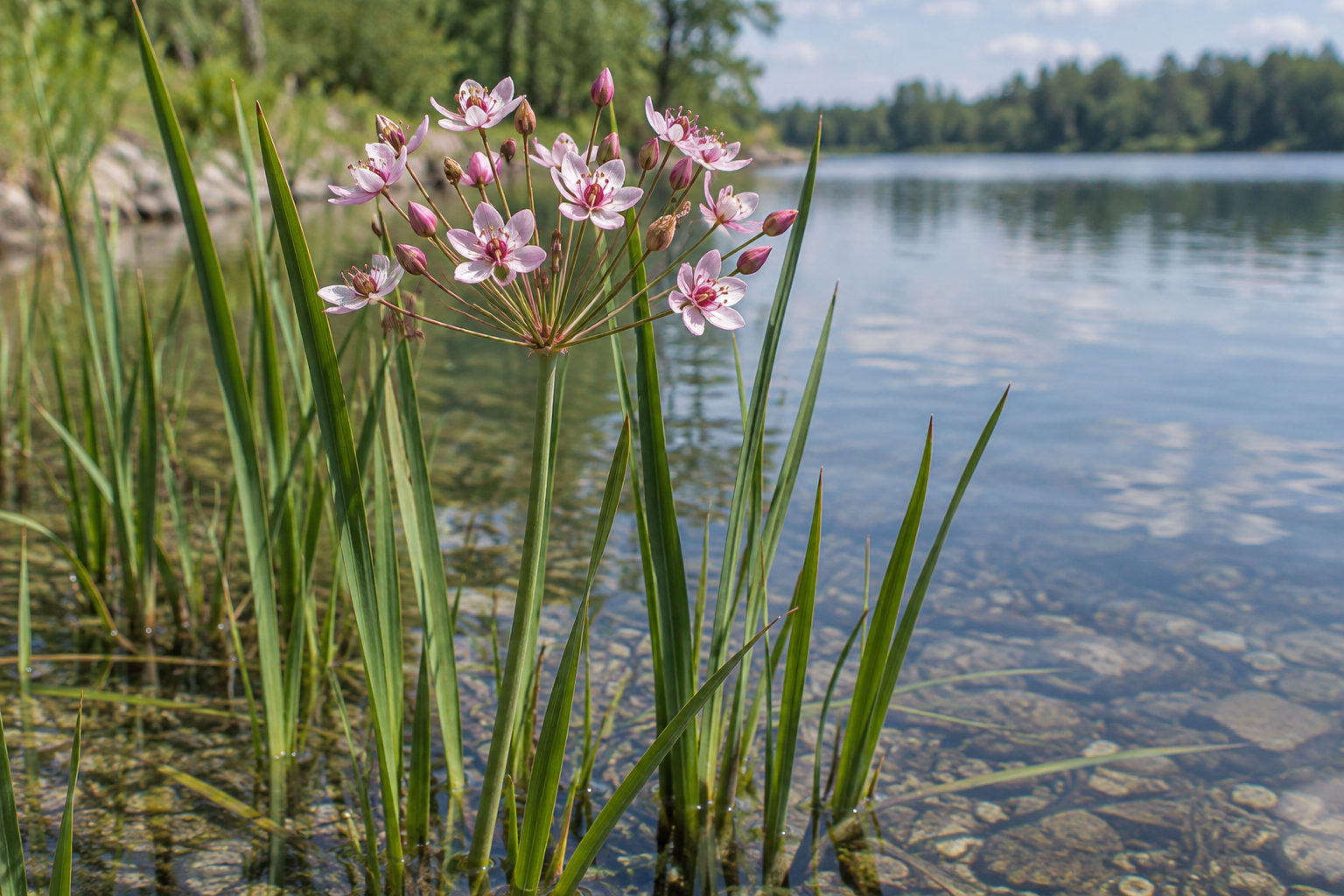
Butomus umbellatus
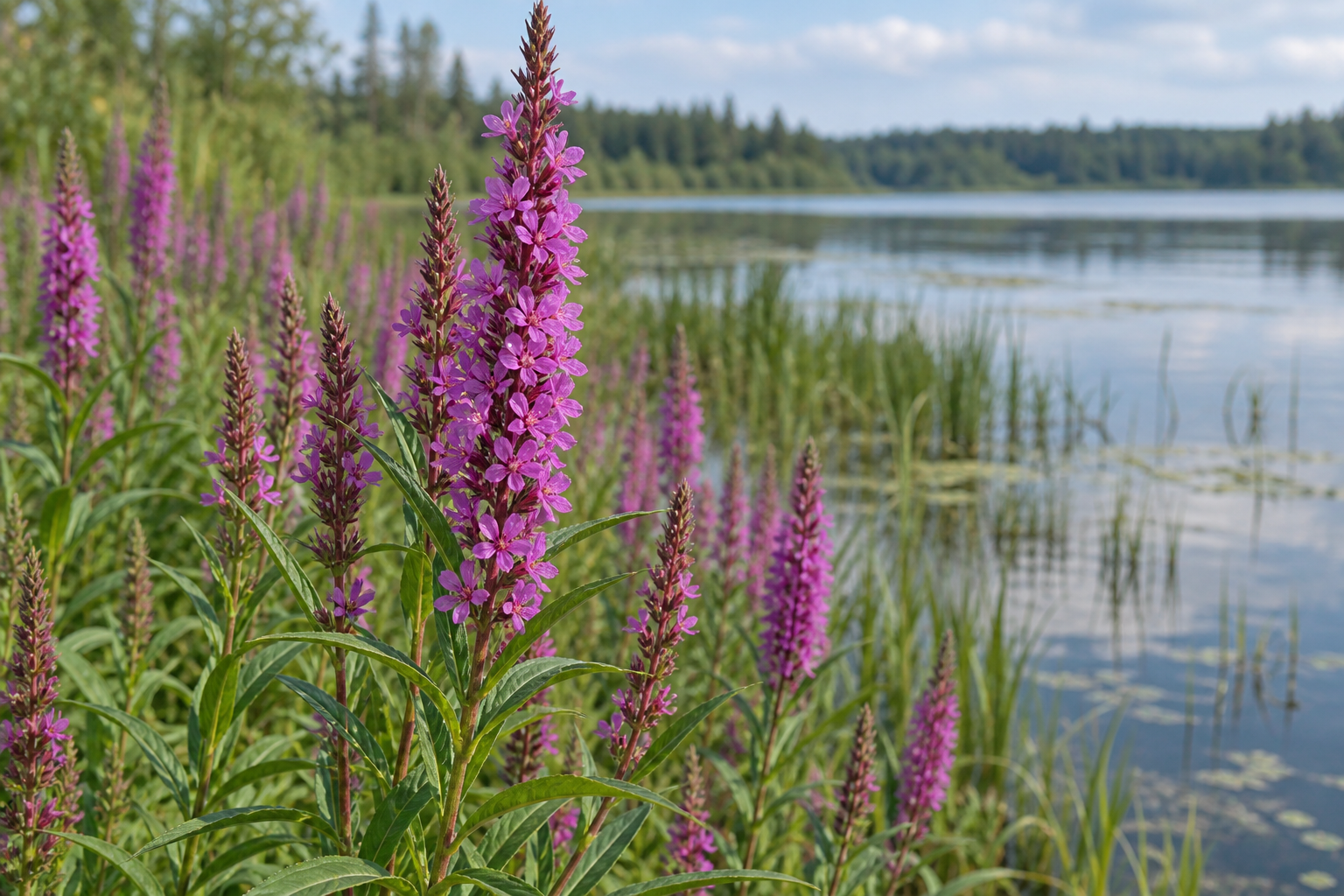
Lythrum salicaria
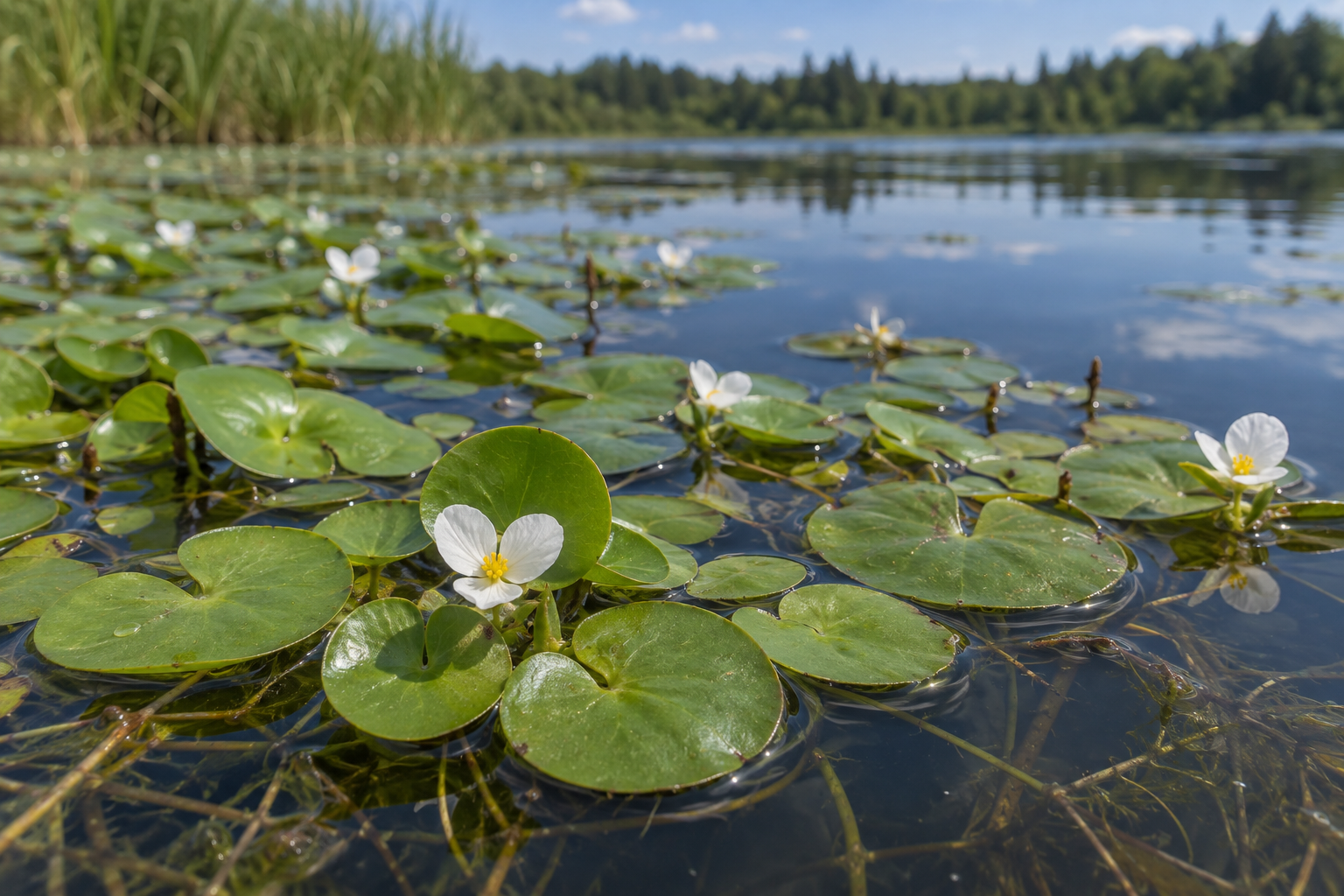
Hydrocharis morsus-ranae
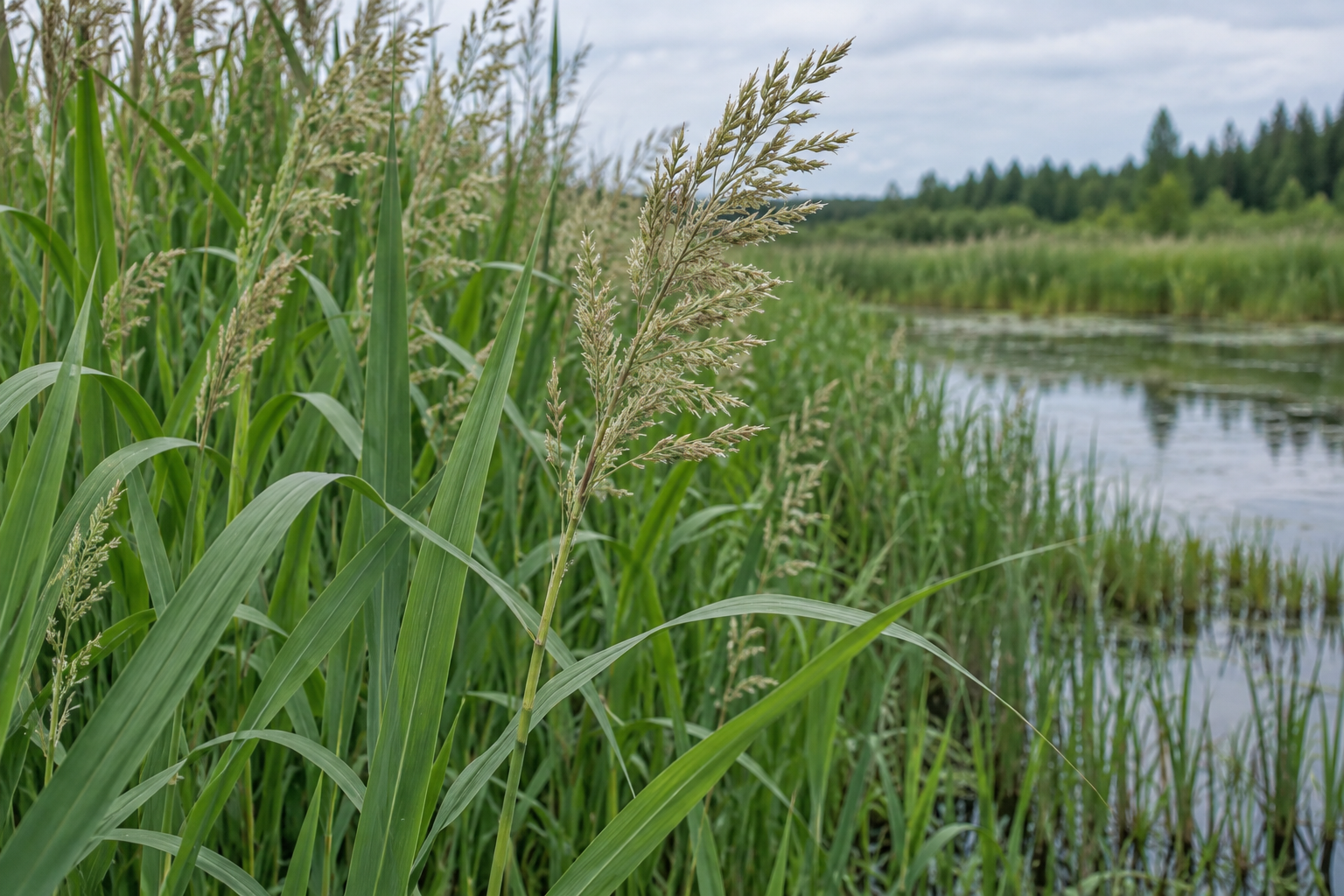
Phalaris arundinacea
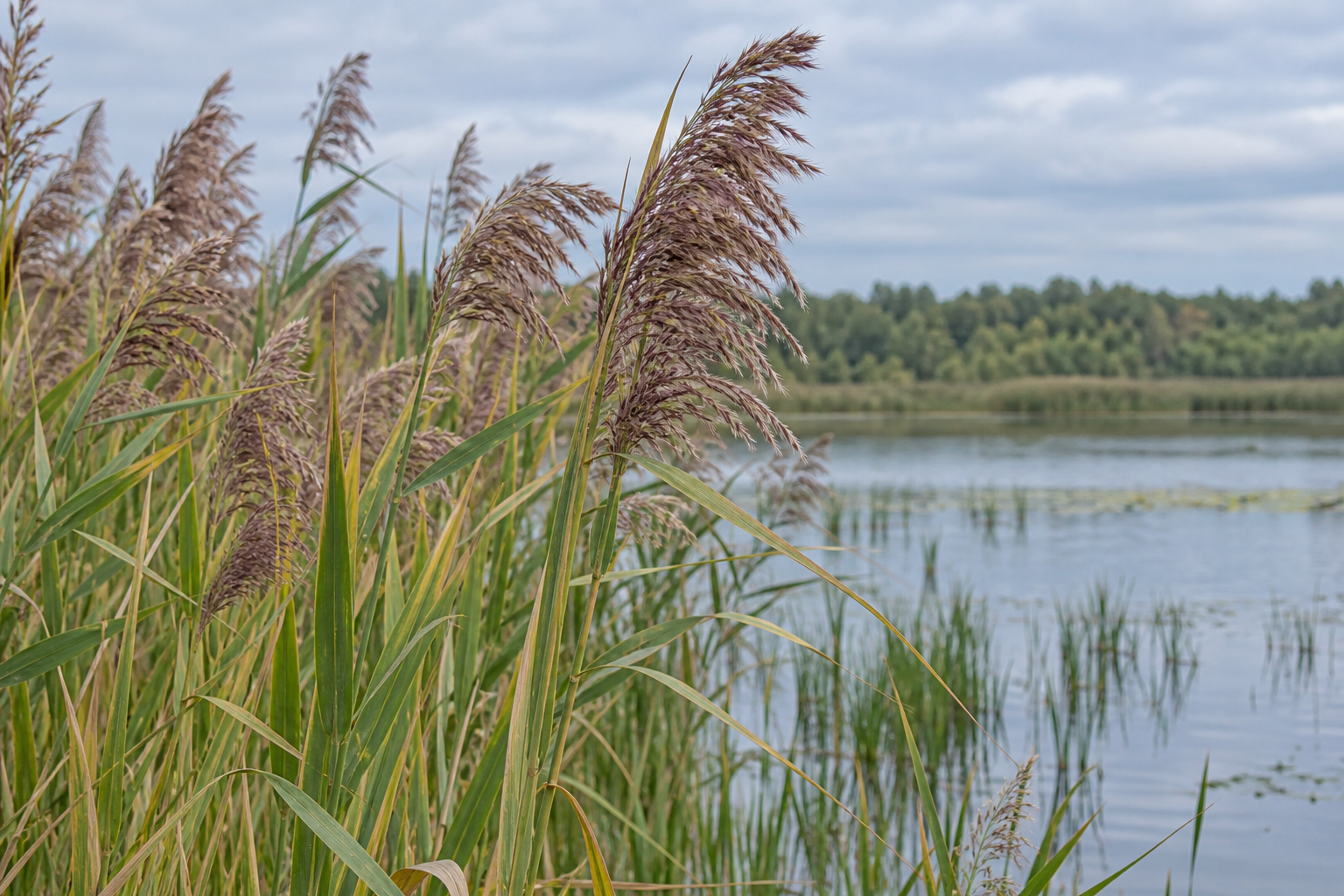
Phragmites australis
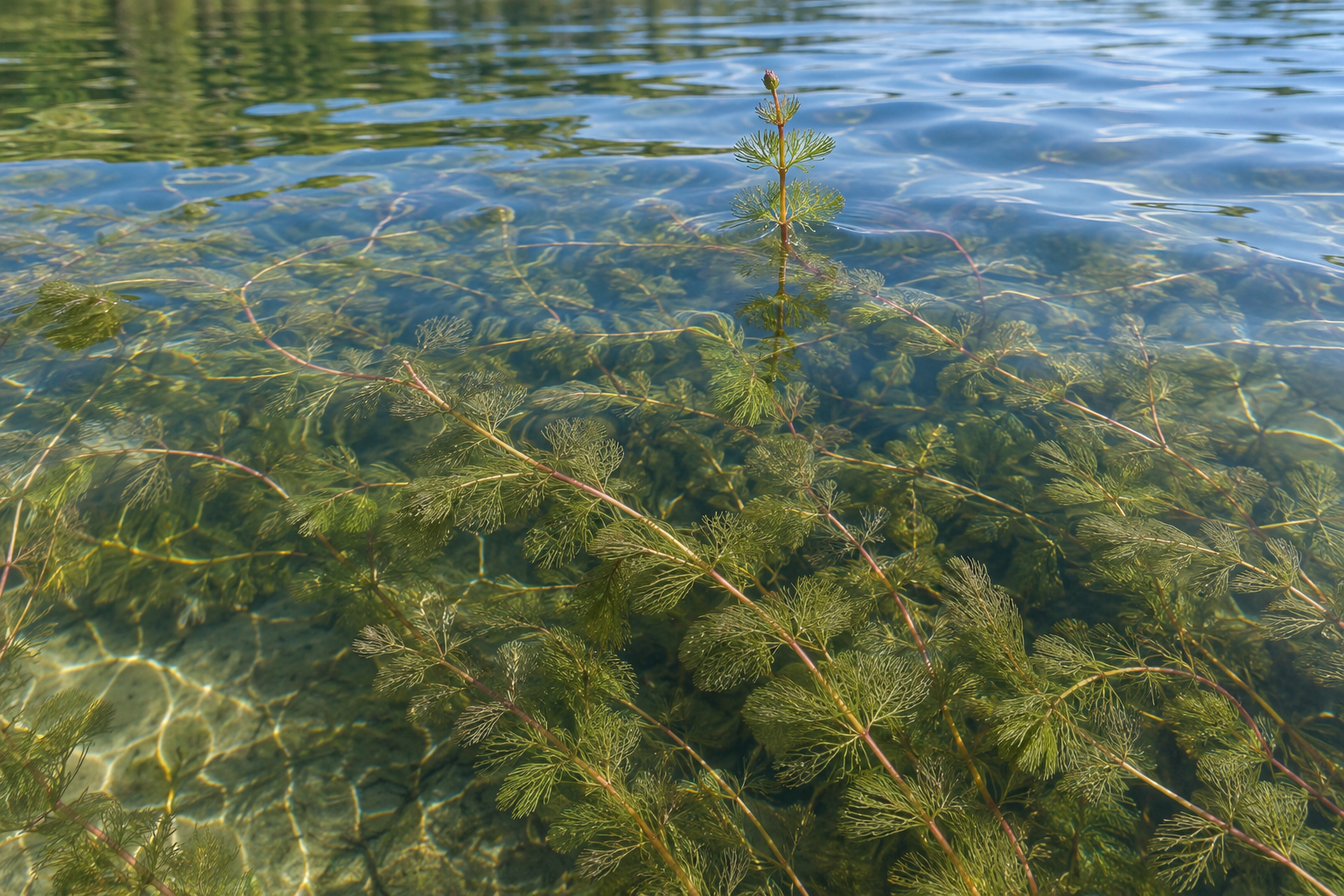
Myriophyllum spicatum
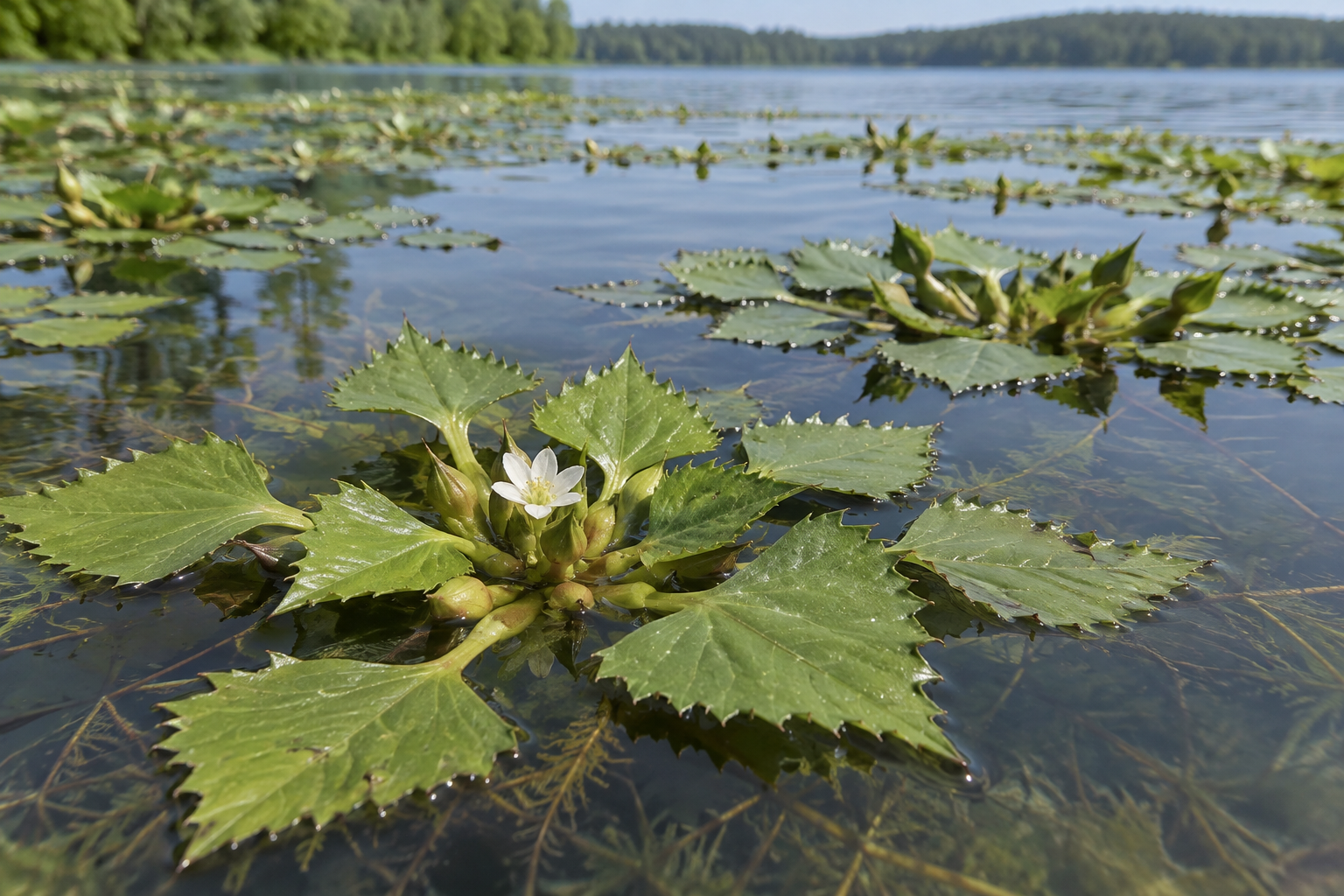
Trapa natans
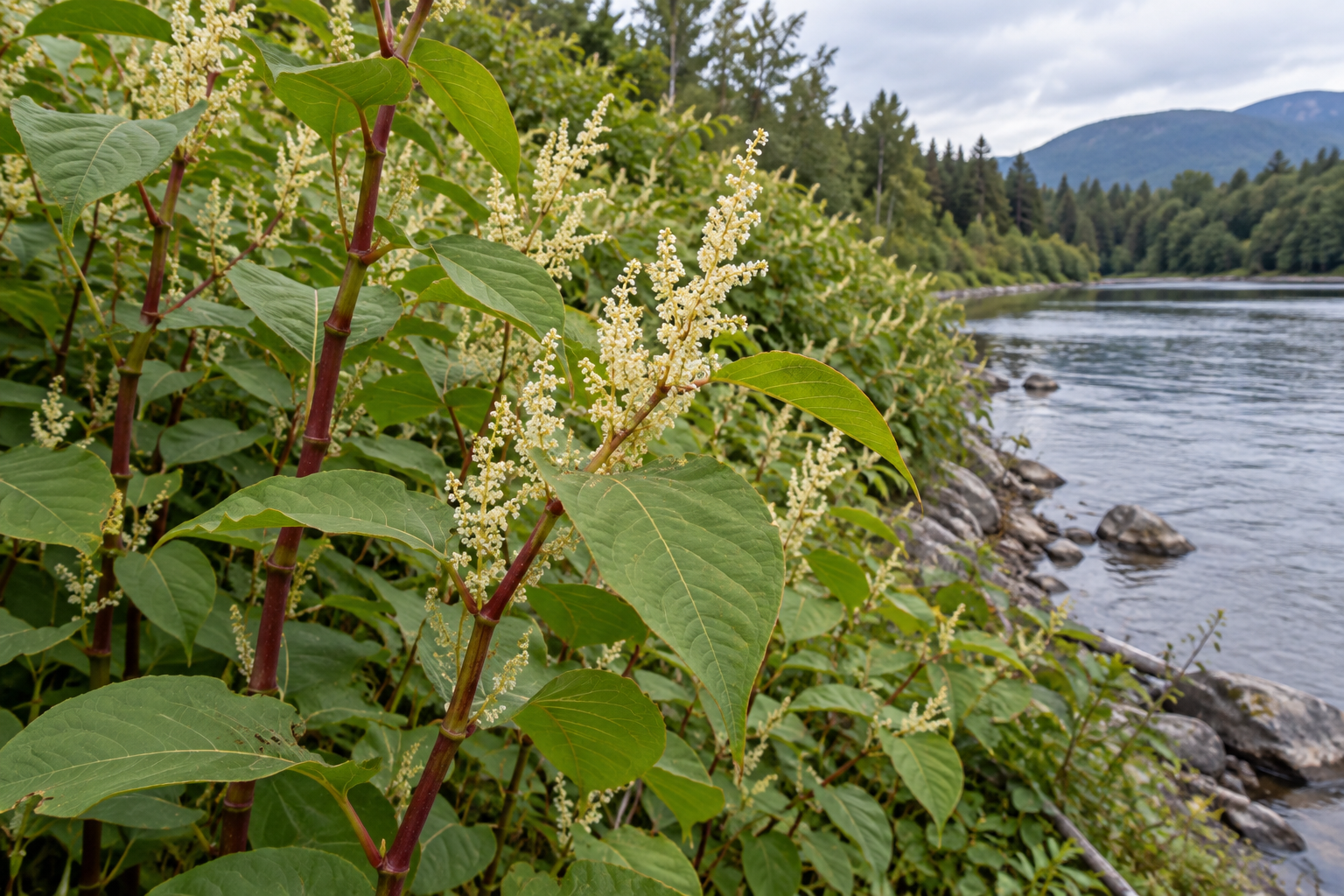
Reynoutria japonica
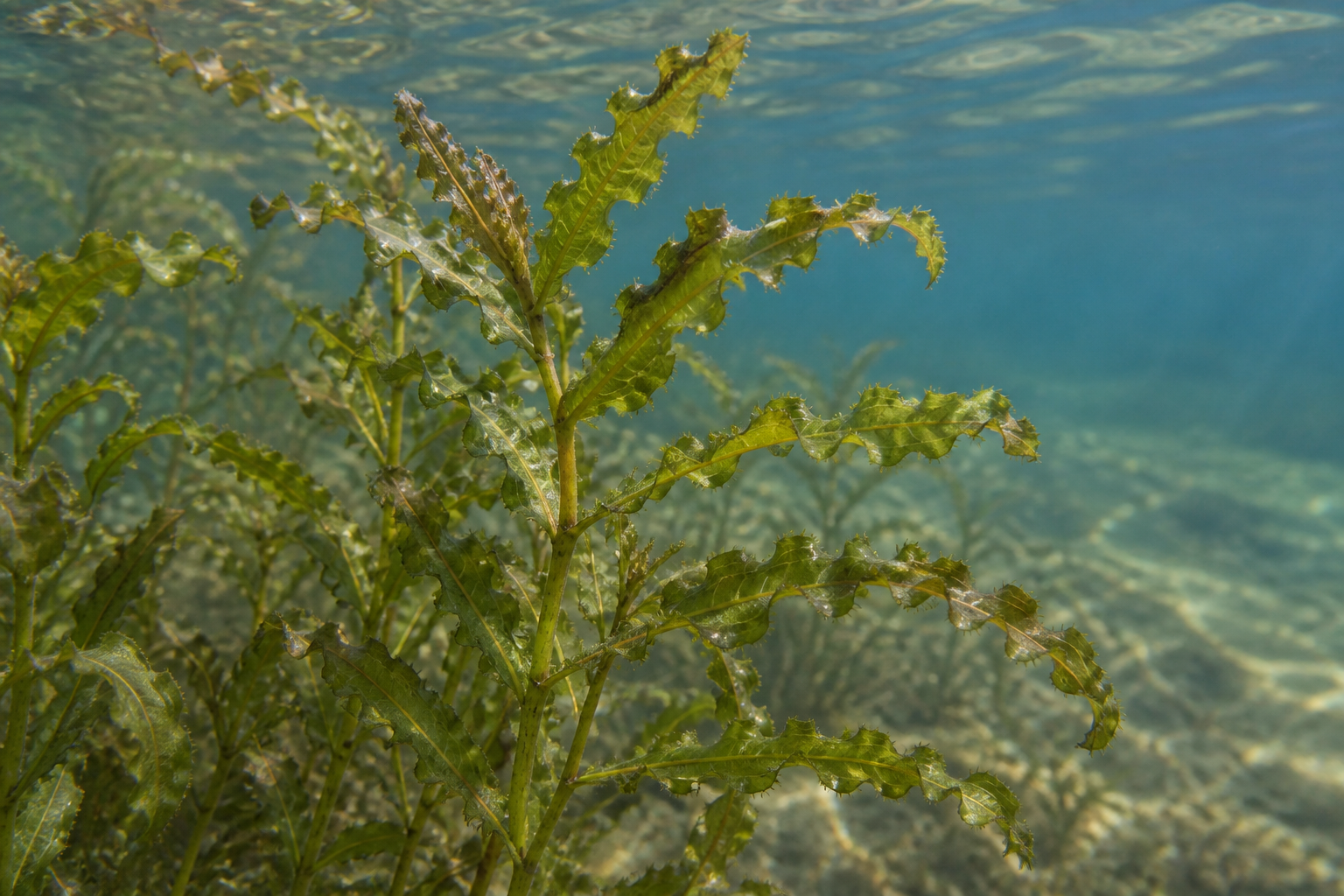
Potamogeton crispus
For Eurasian watermilfoil specifically, see our Eurasian Water Milfoil Control with ProcellaCOR FX page.
Highlighted invasive species
Common reed (Phragmites australis)
Invasive common reed is a tall perennial grass that can form dense stands along shorelines, ditches and wetlands. These stands crowd out native vegetation and can change the character of a wetland.
- Dense stands can reduce plant diversity and provide poorer habitat and food for wildlife.
- Reed beds can restrict shoreline access and impede drainage in ditches and culverts.
- Management is site-specific and often requires repeated follow-up.
Curly-leaf pondweed (Potamogeton crispus)
Curly-leaf pondweed is a submerged perennial with crinkled, toothed leaves. It grows early in the season and can form dense beds in shallow water.
- Dense beds can crowd native aquatic plants and interfere with swimming, boating and fishing.
- The plant produces turions, which can be moved to new areas by water, boats and equipment.
- Its early-summer dieback releases phosphorus into the water and can contribute to cyanobacterial blooms.
- Hand removal should begin before turion production, with all plant material removed from the water.
Eurasian watermilfoil (Myriophyllum spicatum)
Eurasian watermilfoil is a submerged perennial that produces long, feathery stems and can form dense surface-reaching beds.
- Small stem fragments can take root and form new plants, helping the species spread.
- Dense beds can displace native aquatic plants and reduce plant diversity.
- When stems reach the surface, they can hinder swimming and recreational boating and wrap around outboard propellers.
For Eurasian watermilfoil specifically, see our Eurasian Water Milfoil Control with ProcellaCOR FX page.
If you can read French, we suggest consulting the French version of this page to read more about these specific plants and their alternatives.
Water fringe, an aquatic plant you don’t want to see in your pond!
But unfortunately, Nymphoides peltata (also known as water fringe or yellow floating heart) is widely available in garden centers. Don’t make the mistake of purchasing it, as it spreads around very easily, and little is known about the control of this species, and no biological control is known.
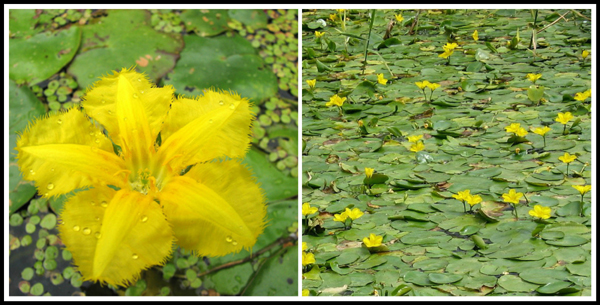
- It kills fish and underwater plants by taking most of the oxygen from the water.
- It also kills fish by taking sunlight from plants, which is their food source. Larger fish then die because the smaller fish are their food source.
- It keeps us from canoeing, kayaking, and swimming in our ponds because the roots are stiff and hard to evade.
- It costs millions of dollars to prevent and impacts the tourist industry
There are solutions available, in the form of aquatic weed control tools, bio-augmentation and aeration systems, but they do require physical work and patience. Do not hesitate to contact us to find out more!