 Click here to visit Bubbletubing.com
  Aeration
  Deicing
  Floating Fountains
  Bioaugmentation
  Aquatic Tools
  Bubble Curtains
 Insulating Your Thawline System
A Thawline de‑icing system is designed to keep an area of water ice‑free during winter by continuously bringing warmer bottom water to the surface using compressed air.
A complete Thawline system typically includes:
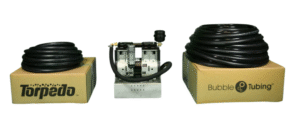
What is Torpedo Tubing?
Torpedo Tubing is the feeder airline that carries compressed air from the compressor to the Bubble Tubing® diffuser in the water.
Because it transports warm air, it is the most critical section of the system to protect against freezing.
Why Insulating Torpedo Tubing Matters
In cold winter weather, warm air leaving the compressor cools as it travels through exposed Torpedo airline. As it cools, condensation forms inside the tubing. If this moisture freezes, it can create ice plugs which may:
- Restrict or block airflow
- Reduce the efficiency of the Thawline system
- Increase strain on the compressor
- In severe cases, completely stop the system
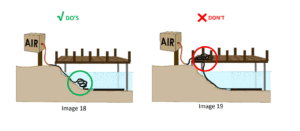
Installation Diagram: Do’s & Don’ts
(Referring to the diagram)
Any extra length of Torpedo Tubing should remain submerged underwater. Tubing left outside the water is exposed to cold air, which increases condensation and the risk of ice formation.
How to Protect Torpedo Tubing in Winter
1- If the Compressor Is Installed Away from Shore
When the compressor is located inland:
- Insulate the Torpedo Tubing along its entire path to the water.
- Bury the line at least 30 cm (12 in.) below ground to shield it from temperature swings.
- Use insulated conduit or PVC piping for extra protection and easier access.
- Avoid dips or low points where condensation could collect and freeze.

2- If the Compressor Is Installed on a Dock or Near Water
When the compressor is close to the shoreline, the short exposed section is the most vulnerable.
- Insulate the tubing from the compressor outlet down to the water using pipe insulation, duct insulation, or condensation‑resistant materials.
- Ensure full coverage of the exposed section, and seal all seams with weather‑resistant tape.
3- Heated Installations for Extreme Cold
For regions reaching –40 °C (–40 °F):
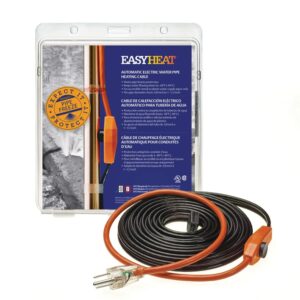
- Install a low‑wattage heating cable alongside the Torpedo Tubing before applying insulation.
- Follow the manufacturer’s guidelines for spacing and temperature limits.
Caution: Heating cables are for extreme cold only and should not run continuously—excess heat can damage tubing or insulation.
System Operation: Important Winter Guidelines
Continuous Operation Only
Unlike some surface de-icers (e.g., Kasco units), a Thawline system should NOT run on a timer during winter.
Turning the system on and off causes warm, moist air to repeatedly cool inside the tubing,dramatically increasing the risk of ice plugs.
For reliable performance, run the Thawline continuously throughout the winter.
Clearing a Frozen Line
If you suspect a blockage:
1- Carefully feel along the tubing for cold or frozen sections.
2- Warm the affected area gently using:
– a heating blanket, or warm water (not exceeding 50 °C)
3- Do NOT use open flames or high heat.
If you are unsure, please contact us for assistance.
Safety Notice
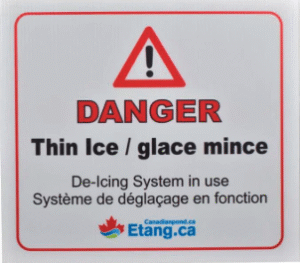
Ice around Thawline de-icers may be thin, fragile, or completely open, creating a serious risk of injury or drowning.
Install clear, visible “Danger: Thin Ice” warning signs around the area. Appropriate danger signage is available here.